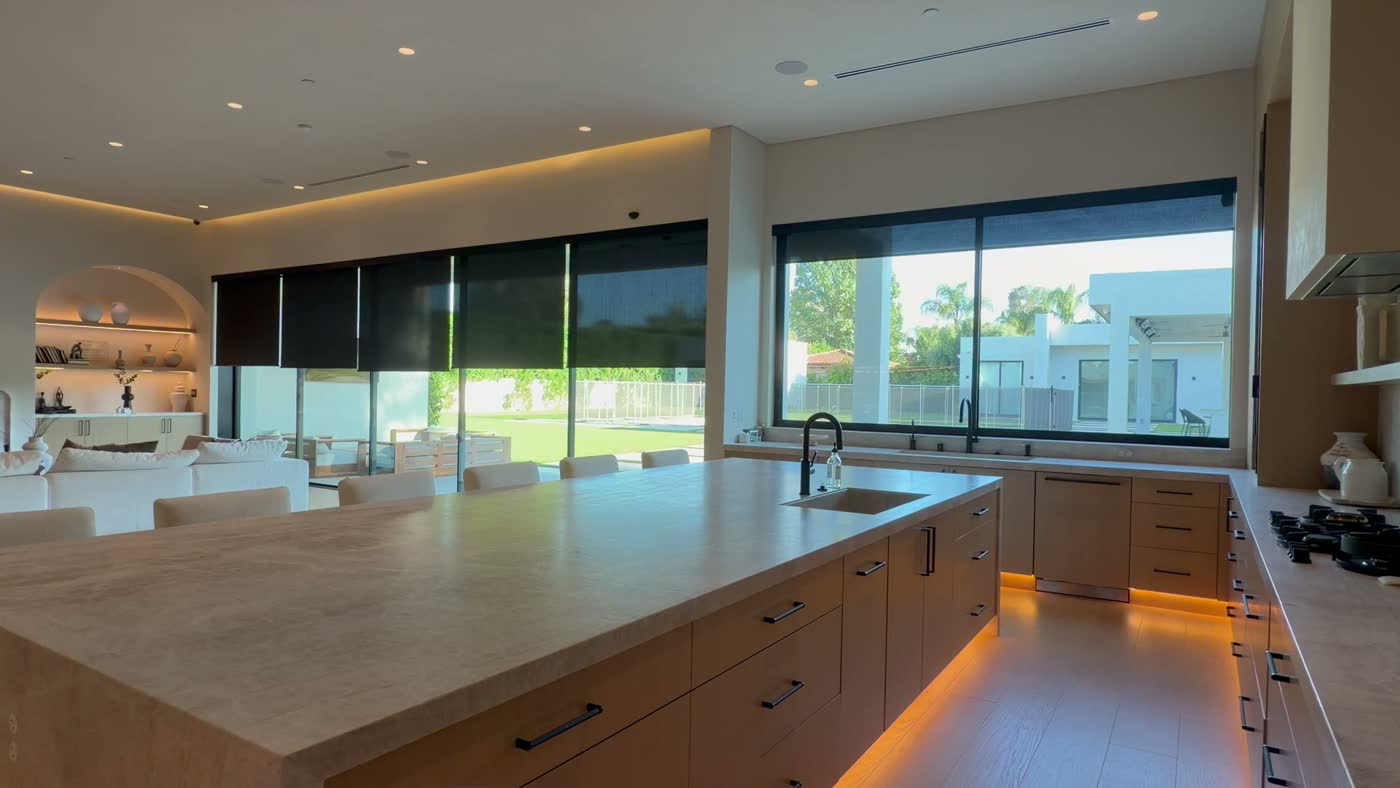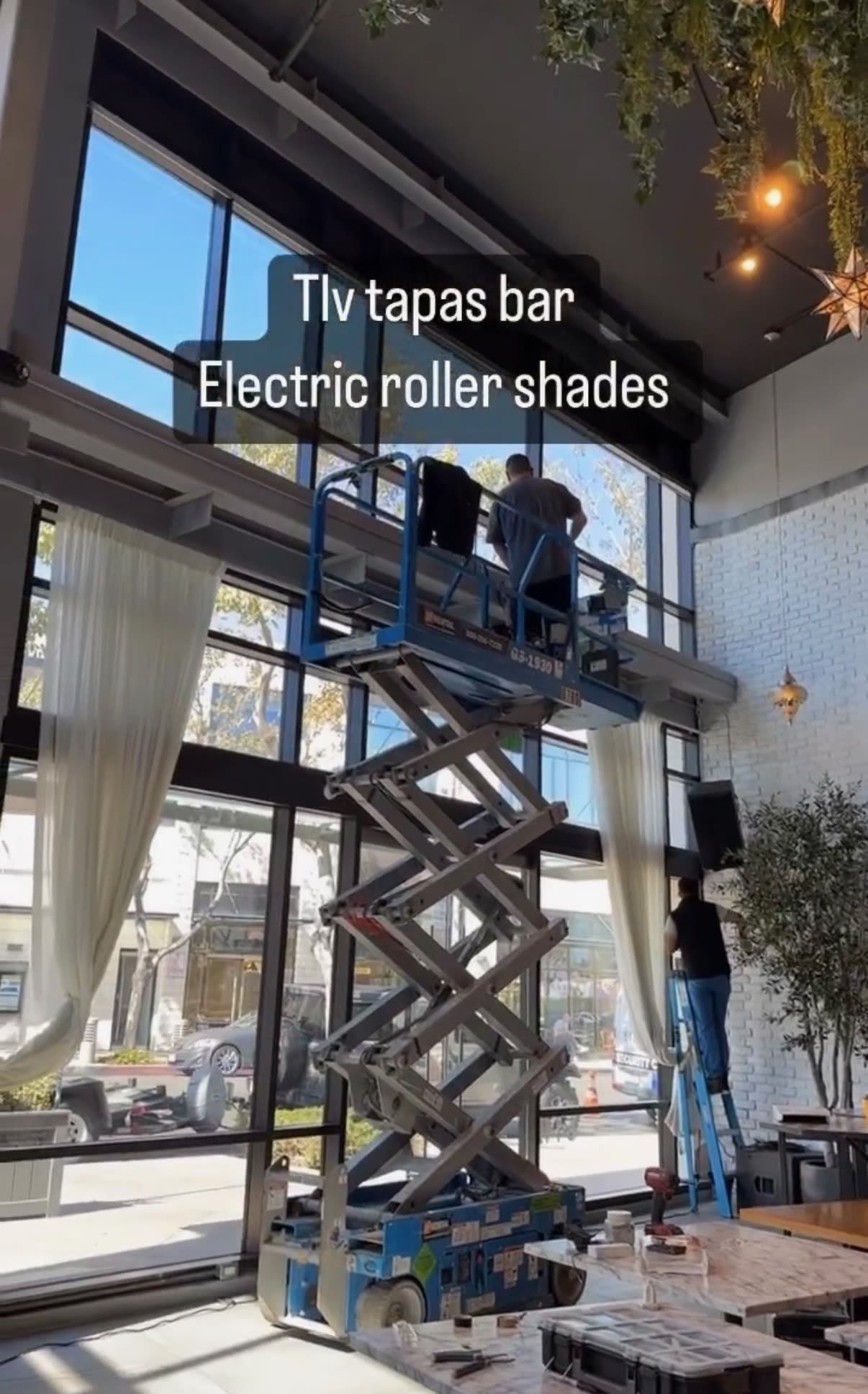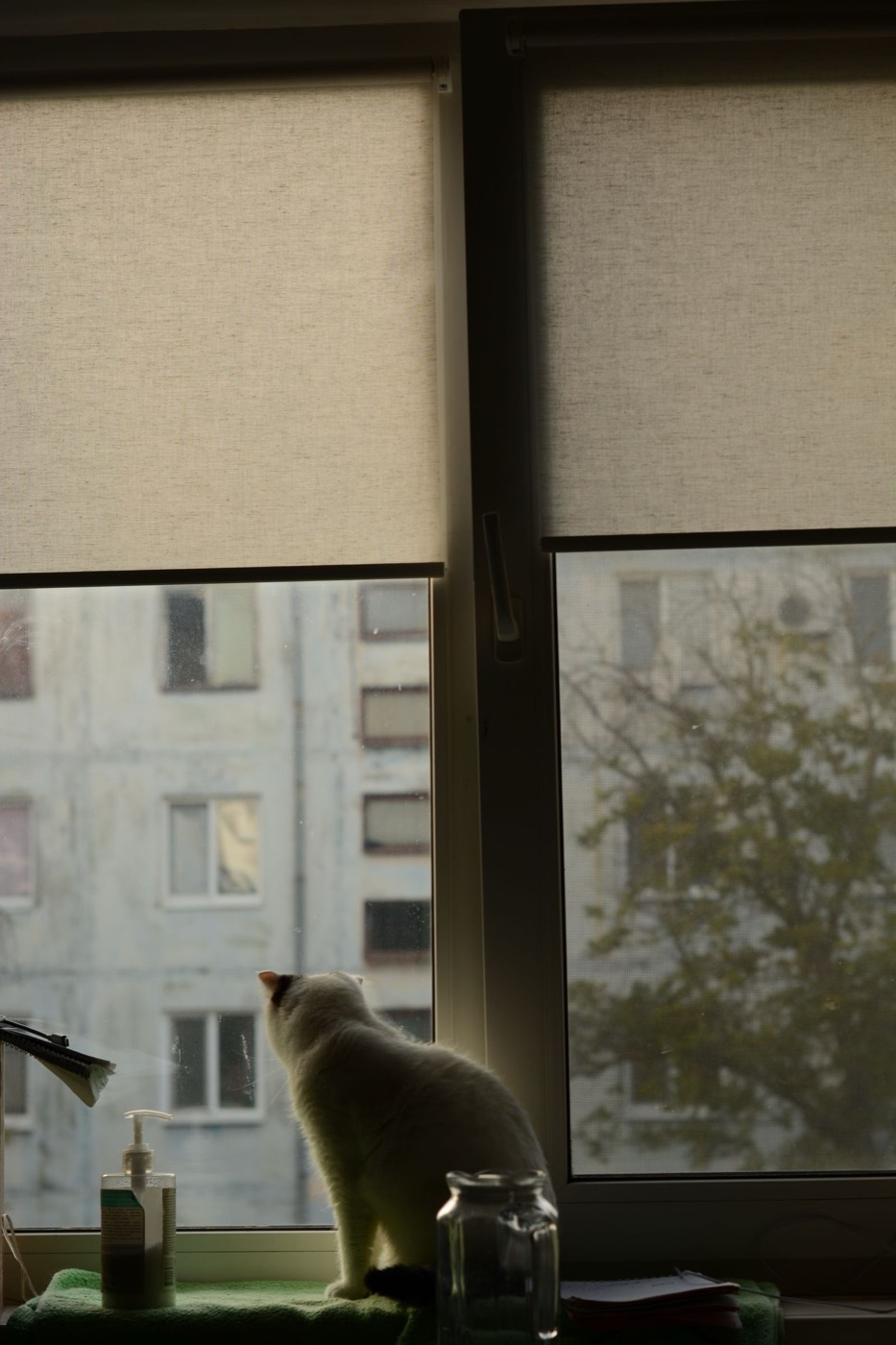
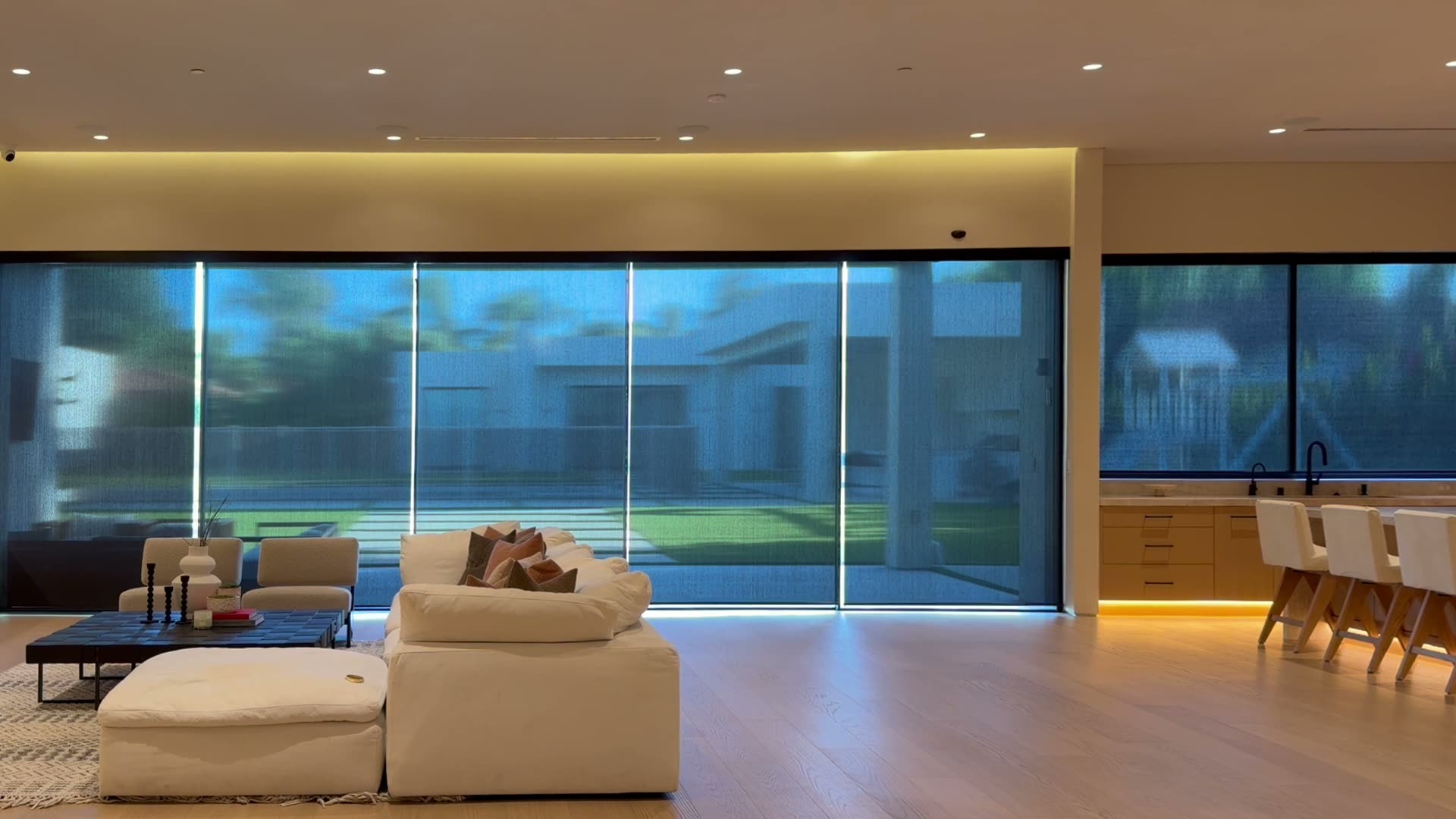
Battery motors are the right choice for a house that is already finished: they need no wiring and recharge about once a year with a cable. Hardwired motors are the right choice when the walls are open for construction or a remodel, or when the shade is tall and heavy, and they never need charging. We hold an electrical license (#990554) and install both, so the recommendation comes from your house, not from what we are able to do.
What is the difference between battery and hardwired shade motors?
Both motors sit inside the shade’s tube and do the same job. The difference is where the power comes from.
A battery motor carries its own battery in the tube. Nothing runs to the wall. About once a year you plug a charging cable into it, and that is the maintenance.
A hardwired motor runs on low-voltage wire back to a power supply. It never needs charging. The catch is that the wire has to get from the shade to that power supply, and in a finished house that means opening walls or ceilings.
There is a third option people rarely hear about. A panel-charged motor trickle-charges from a small panel on the glass. It exists for high windows you would rather never reach again.
How do battery and hardwired motors compare?
| Battery | Hardwired | |
|---|---|---|
| Wiring | None. The motor slides into the tube | Low-voltage wire back to a power supply |
| Charging | About once a year, with a cable | Never |
| Tall, heavy and oversized shades | Hardwired handles these better | The better choice |
| Power outage | Keeps working | Stops until power returns; most models can still be operated by hand |
| When it makes sense | A finished home | Construction or remodel, when walls are open |
| Electrical work | None | Yes. We do it under license #990554 |
Is a battery motor the cheap compromise?
No. It is a different answer to a different situation. In a finished home the alternative to a battery motor is cutting drywall to run wire to every window, then patching and painting. Plugging in a cable once a year is a small job next to that.
Where battery motors come up short is weight. On a very tall shade, a wide span of sliding doors or a heavy fabric, a hardwired motor is the stronger choice.
When is hardwired worth it?
In two situations.
The first is when the walls are already open. During new construction or a remodel, running low-voltage wire to each window is straightforward, and afterward you never think about charging again. If you are remodeling and might want motorized shades in the next few years, that is the time to run the wire.
The second is size. Tall, heavy and oversized shades are hardwired territory.
Hardwired work has to be done properly. Because we are licensed for it, the wiring is done and inspected like any other electrical work, not run through an extension cord hidden behind the curtain.
What happens to motorized shades in a power outage?
Battery shades keep working, because the power is in the tube. Hardwired shades stop until the power comes back, and on most models you can still operate them by hand. Neither one leaves you stuck in a dark room.
What about windows I can’t reach?
Stairwells, double-height living rooms and clerestory glass above a kitchen are where motorized shades earn their money, because if you need a ladder you will never adjust the shade by hand. The same logic applies to charging. For those windows we look at a panel-charged motor, or hardwired if wire can reach the spot.
Does the motor choice affect anything else?
The motor is one of three decisions. The other two are the fabric, which decides how the room feels (light filtering or blackout), and the control, which decides whether you actually use the shades. You can browse the fabrics we build with on our fabrics page, and read how remotes, apps, voice and schedules work on the motorized shades page and the smart home integration page.
A modern shade motor is quieter than a dishwasher and runs for a few seconds. If silence matters in a bedroom, tell us when we measure. Some motors are noticeably quieter than others.
What we’d put in your room
- Finished living room or bedroom, normal-size windows: battery. No walls opened, charge once a year.
- Remodel or new construction: hardwired, with the wire run while the walls are open.
- A wall of sliding doors or a tall, heavy shade: hardwired.
- Clerestory or stairwell glass: panel-charged, or hardwired if the wire can get there.
- A room with a mix: we look at each window, not the house as a whole. The answer is not always the same for every opening.
We build every shade in our own shop and install in about two days, so the motor decision is made at the measurement, not guessed from a catalog.
Battery vs wired motorized shades, in short
Battery motors need no wiring and keep working in a power outage. Wired (hardwired) motors never need charging and suit a build or remodel. Either way, every motor gets a lifetime warranty. See motorized shades in Los Angeles or how our shades tech works.
We’ll look at your windows and tell you which motor each one needs at a free consultation: request a quote or call (702) 927-2537.