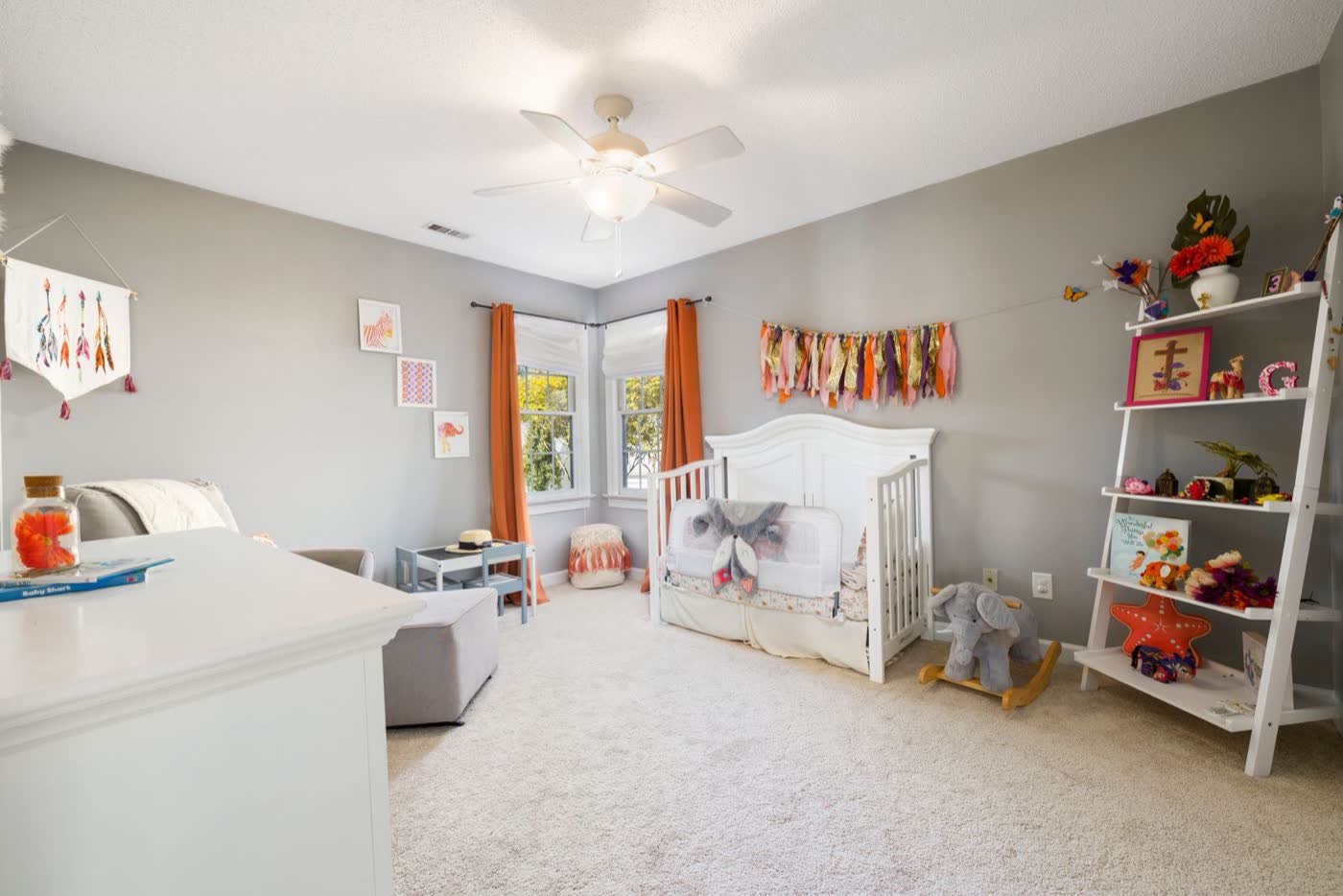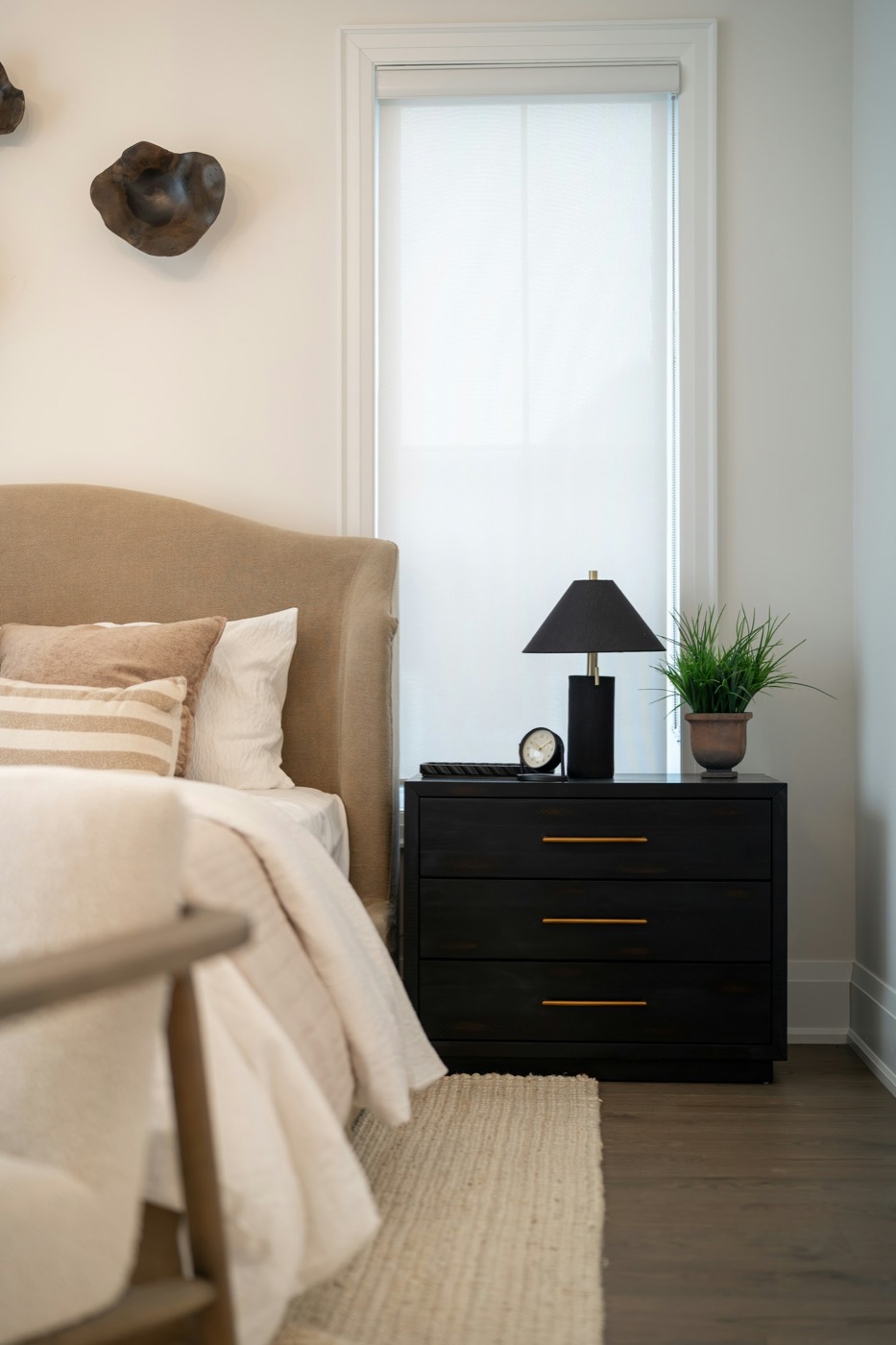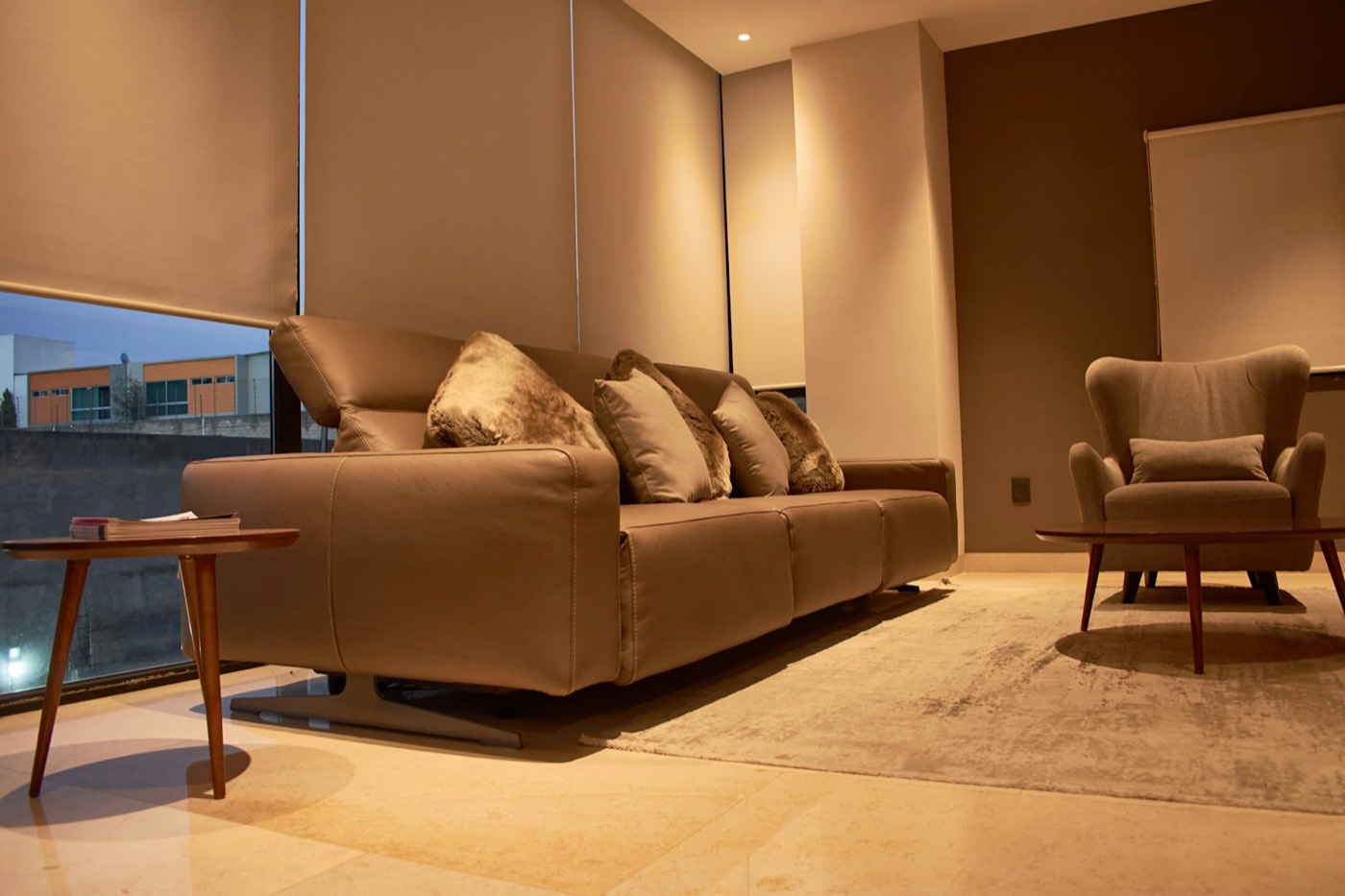
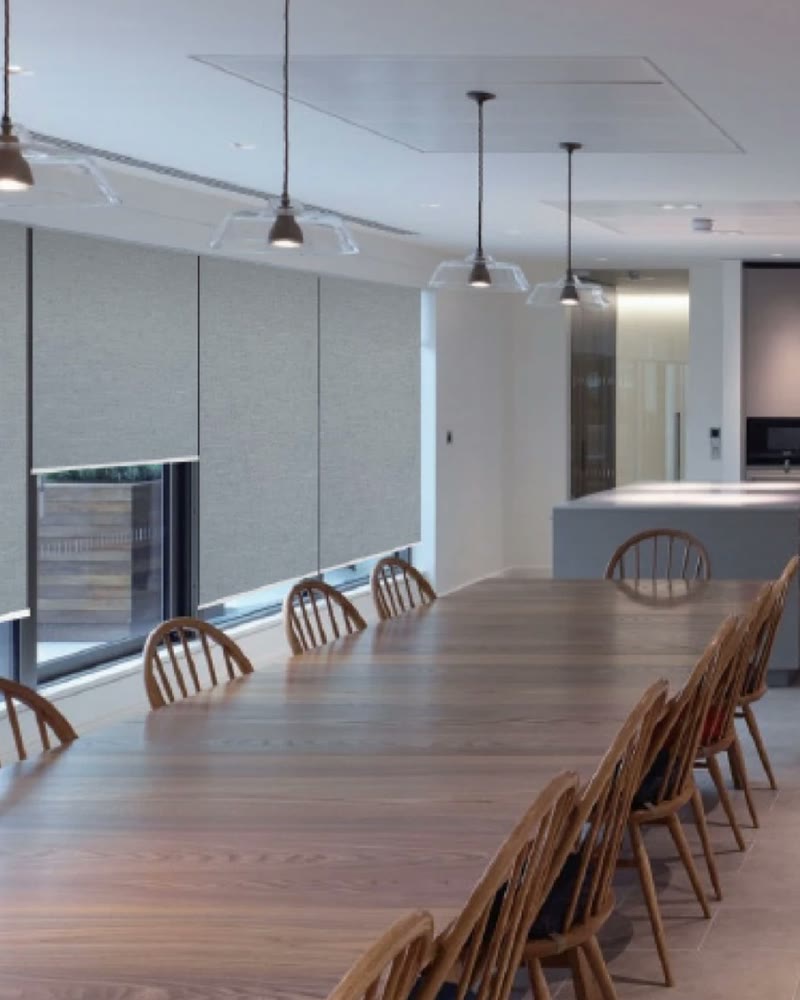
Choose light-filtering shades for rooms you use in daylight, such as living rooms, kitchens and offices: the room stays soft and bright, and people cannot see in during the day. Choose blackout shades for rooms that have to be dark, such as bedrooms, nurseries and media rooms: the fabric stops light completely. If one window needs both, a dual roller puts a light-filtering shade and a blackout shade on the same bracket.
What is the difference between light-filtering and blackout fabric?
It comes down to how much light passes through the weave.
Our light-filtering roller fabrics are under 1% openness. Daylight comes through soft and even, the glare goes, and you do not see out through it. The room still feels like daytime.
Blackout fabrics are 0% openness. They have an opaque backing, and no light passes through the fabric at all. You get a dark room and no view.
In between sits room-darkening fabric, which blocks most light with some bleed at the edges. It suits a room that should be dim, not dark. It is not the answer for anyone who sleeps during the day.
You can see every fabric in each group, with its openness, on our fabrics page.
How do they compare?
| Light filtering | Blackout | |
|---|---|---|
| Light through the fabric | Soft, even daylight | None |
| Openness | Under 1% | 0% |
| View out | No | No |
| Daytime privacy | Yes | Yes |
| Room feels | Bright | Dark |
| Best for | Living rooms, kitchens, offices | Bedrooms, nurseries, media rooms |
Will a blackout shade make my room completely dark?
The fabric will. The edges are a separate problem, and they are the reason most blackout shades disappoint.
An inside-mounted shade has to be slightly narrower than the window opening to move at all. That leaves a gap down each side, and at six in the morning it shows up as a halo of light around the shade. There are three real fixes:
- Outside mount: the shade is wider and taller than the opening and overlaps the wall. Simple, effective, and the least expensive genuine fix.
- Side channels: thin aluminum tracks on each side of the window that the shade runs inside, so light cannot pass at the edge. The difference between a dark room and a genuinely black one.
- Fabric-wrapped valance: closes the gap at the top, where most of the light actually enters.
We look at the opening, the frame depth and where the sun hits, then tell you which one the room needs before you order.
When is light filtering the better choice?
In any room where you want daylight but not glare or an open view. A living room facing a neighbor, a kitchen with afternoon sun, an office where the screen washes out. Blackout in those rooms makes them feel shut up in the middle of the day.
If you want to adjust the light through the day rather than choose one level, look at zebra shades as well. They are not blackout, though, even when closed.
When do I need blackout?
Bedrooms, especially if anyone in the house works nights. Los Angeles mornings arrive early, and the difference between a room-darkening shade and a true blackout with side channels is the difference between sleeping and not.
Nurseries, because nap time happens in daylight. This is the most common reason people call us about blackout shades. For a child’s room we always recommend cordless or motorized, because a hanging cord is a genuine hazard.
Media rooms and offices. A projector needs darkness to hold contrast, and a monitor needs the window behind you under control. Both usually justify side channels and a motor, so the room changes with one button.
Do blackout shades help with heat?
Yes, meaningfully. An opaque shade on west-facing glass cuts a large part of the afternoon heat load. It is not a substitute for good glass, but the room is noticeably cooler.
Can I have both on one window?
Not from one shade. The answer is a dual roller: two shades on a single bracket, a light-filtering fabric in front for daytime glare and a blackout behind it for night. We assemble those as one unit in our own shop, so the two shades sit square to each other and the valance covers both.
What we’d put in your room
- Living room or kitchen: light-filtering roller shades.
- Bedroom: blackout, outside mount at minimum, side channels if anyone sleeps in daylight.
- Nursery: blackout, outside mount, cordless or motorized. Never a cord.
- Media room: blackout with side channels, motorized.
- Primary bedroom where you also want daylight: a dual roller, light filtering in front and blackout behind.
Light filtering vs blackout curtains or roller shades
The same rule works for curtains and for roller shades: light filtering for living rooms and kitchens, blackout for bedrooms. A roller shade sits closer to the glass, so with side channels it gets a room darker than most curtains. See blackout and light filtering shades or custom roller shades in Los Angeles.
Read more on blackout shades, then book a free consultation and we’ll hold both fabrics on your window: request a quote or call (702) 927-2537.