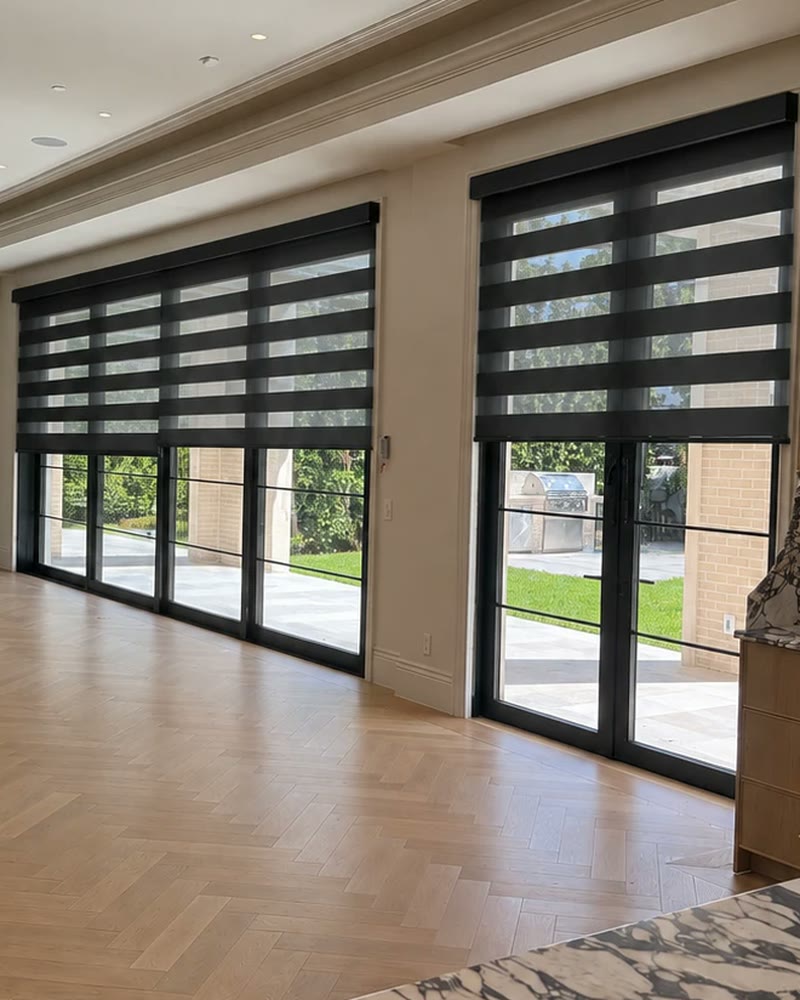
A roller shade is one fabric, and you choose how much light it lets through when you order it. A zebra shade has alternating sheer and solid bands, so you can change the light during the day, the way you would tilt a blind. If you want to adjust the light often, choose zebra. If you want the cleanest look, or a room that goes properly dark, choose roller.
How does a zebra shade work?
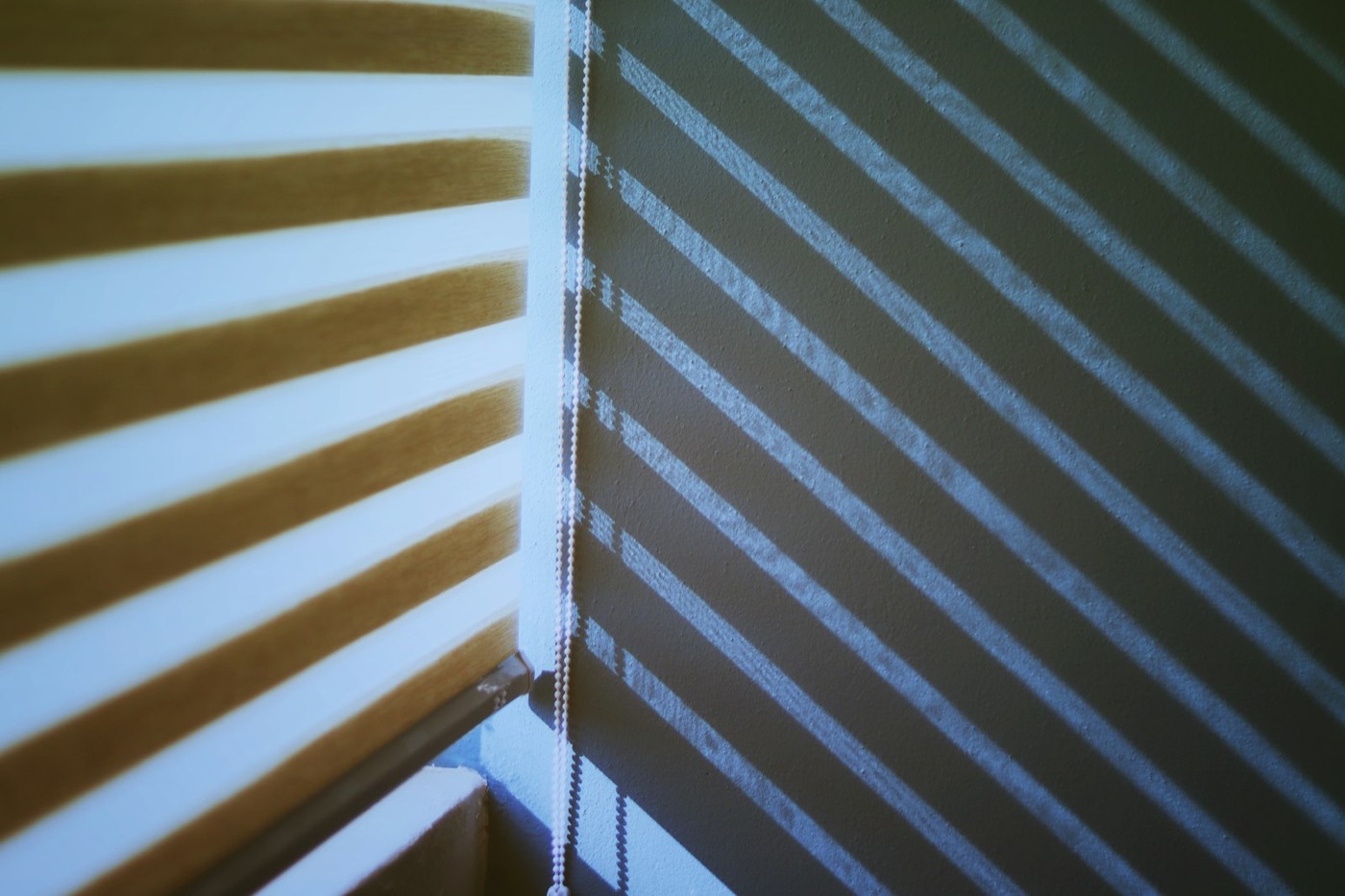
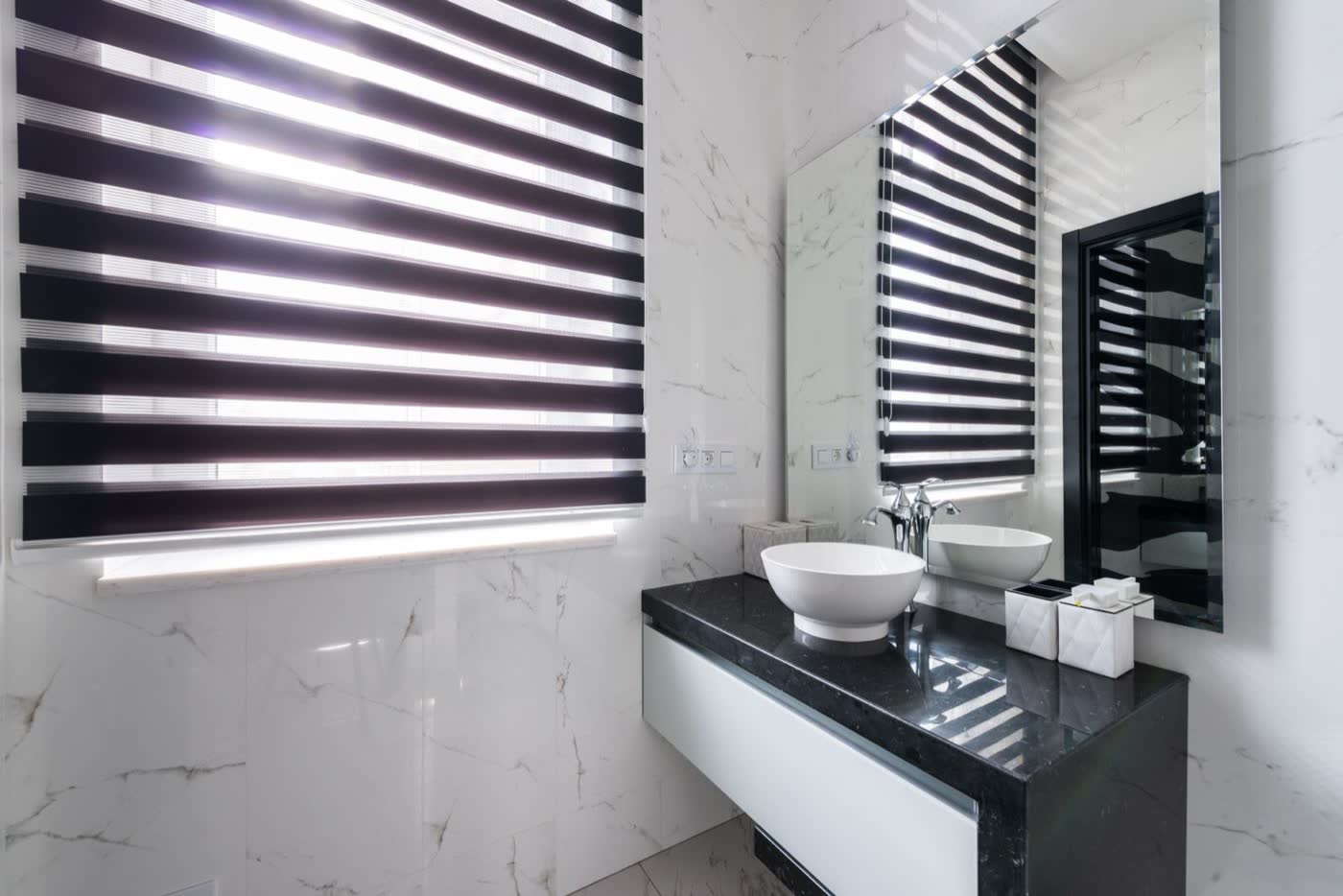
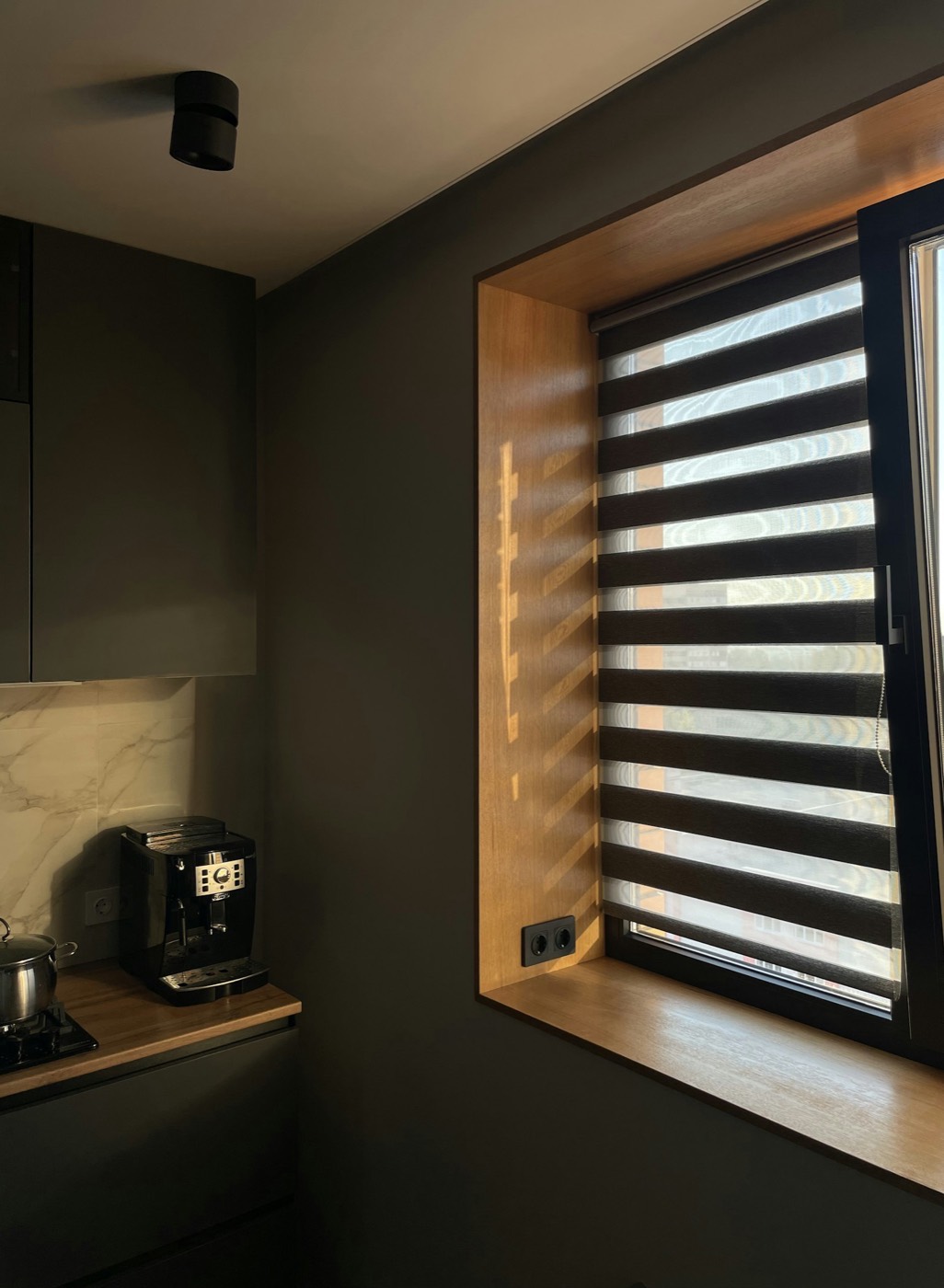
A zebra shade is one continuous loop of fabric, front and back, with horizontal bands that alternate sheer and solid. When the sheer bands on both layers line up, you get soft, filtered daylight and some view. Lower the shade a few inches and the solid bands slide over the sheer ones, closing the window for privacy.
You will also see them called dual shades, banded shades or day-and-night shades. Same product.
How does a roller shade work?
A roller shade is a single panel of fabric on a tube. It rolls up or it rolls down. How much light comes through depends entirely on the fabric you pick:
- Light filtering: no view through it, but the room stays soft and bright.
- Room darkening: blocks most light, with some bleed at the edges.
- Blackout: an opaque backing that stops light completely.
Once it is built, that is the fabric you live with. The only adjustment is how far down the shade is.
Zebra vs roller: how do they compare?
| Zebra shade | Roller shade | |
|---|---|---|
| Fabric | One loop with sheer and solid bands | One single panel |
| Adjusting light | Any time, by shifting the bands | Set by the fabric you order |
| View | Some view with the sheer bands aligned | None through light-filtering fabric |
| Can it be blackout | No. Room-darkening zebra fabrics get close | Yes, with blackout fabric |
| Look | Visible horizontal bands | The cleanest line of any window covering |
| Cleaning | Two layers catch a bit more dust | Single layer |
| Motorized | Yes | Yes |
Are zebra shades blackout?
No. Even closed, a little light passes at the edges and through the fabric. Room-darkening zebra fabrics get close, but if a bedroom has to be truly dark, a blackout roller shade is the right choice.
Which one looks better?
That is taste, but there is a practical point. A roller shade is the plainest thing you can put on a window: one flat piece of fabric, no lines. A zebra shade always shows its bands, open or closed. Some people like the texture. Others find it busy on a big wall of glass. Look at both in your own room before deciding. We bring samples to the house and hold them on the actual window, because fabric under showroom lighting looks nothing like it does in your light.
Where do zebra shades make sense?
- Living rooms: open in the morning, closed in the afternoon sun, without raising the whole shade.
- Street-facing windows: daylight without people seeing straight in.
- Home offices: cut the screen glare and keep the room bright.
The common thread is a room where the light changes during the day and you want to respond to it without pulling the shade all the way up.
Where do roller shades make sense?
Almost everywhere else. A roller shade is the shade most rooms should start with. It suits rooms where you want one light level and a clean look, bedrooms that need a blackout fabric, and big spans of glass where visible bands would be a lot to look at.
If you want soft daylight during the day and full dark at night on the same window, there is a roller option for that too: a dual roller, two shades on one bracket, with a light-filtering fabric in front and a blackout behind it. We build those as one assembly in our shop.
Is one easier to live with?
Both are easy. The zebra fabric’s two layers catch a bit more dust than a single roller, and a soft brush attachment on a vacuum every few months is enough. Roller shades we build are sized so a motor can be added later, even if you order them with a chain today.
Both can be motorized with the same motors, remotes and smart-home control. On a motorized zebra shade, one button sets every shade in the room to the same band position, which matters on tall windows or a room full of them. See motorized shades.
What we’d put in your room
- Living room with afternoon sun: zebra, motorized if there are more than a few windows.
- Street-facing front room: zebra, so you get daylight without being on display.
- Bedroom or nursery: blackout roller. Not zebra.
- Big wall of glass where you want a clean look: light-filtering roller.
- Home office: zebra, for glare you can adjust through the day.
Compare the fabrics on our fabrics page, or see roller shades on real jobs: a wall of sliding glass doors in Woodland Hills and a kitchen window in Beverly Hills.
Zebra blinds vs roller blinds
Many people call them blinds; they are the same products as zebra shades and roller shades. Zebra blinds let you change the light through the day. Roller blinds give one clean fabric and can go fully dark. Learn what zebra shades are or see custom roller shades in Los Angeles.
Book a free consultation and we’ll bring zebra and roller samples to your window: request a quote or call (702) 927-2537.